
THE MAKER BEHIND THE COLLECTION
About the Artisan brand
Artisan began in 1995 in Jaipur, in the Indian state of Rajasthan. Today it is a British company headquartered in London, with offices in the USA and Germany and its own production unit in Jaipur, where over a hundred artisans work. That is where the furniture in our shop comes from.
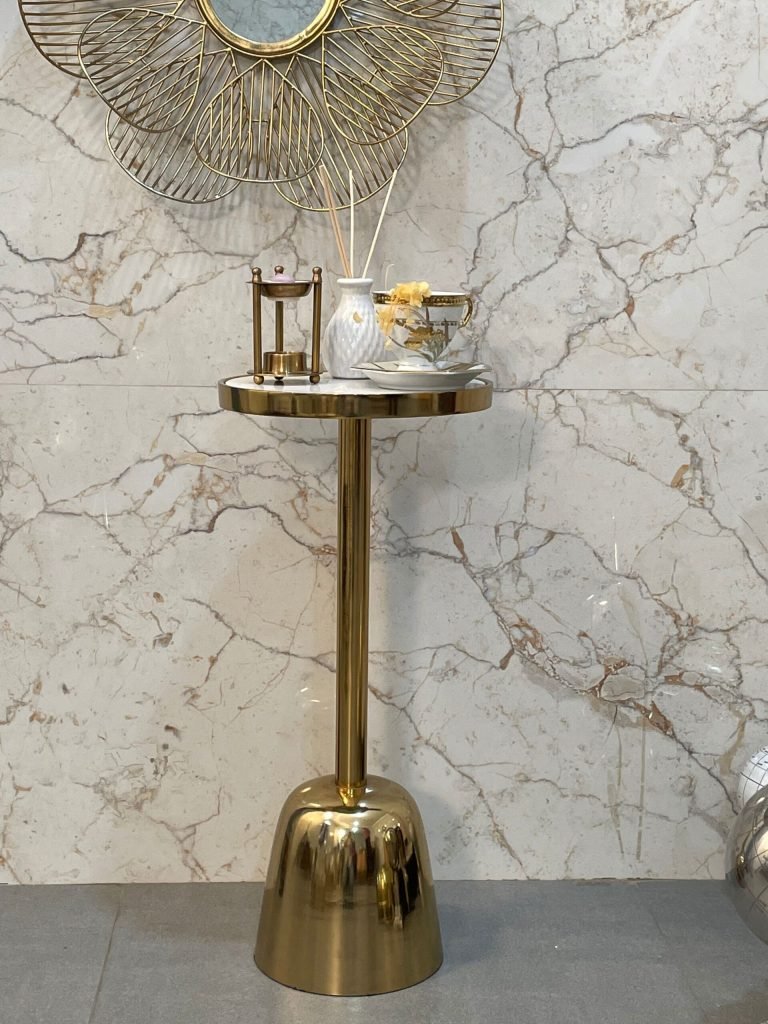
Three words the brand is built on
They call them the three Cs: compassion, community and cognisance — compassion for what artisans actually need, the community they foster around themselves, and cognisance of what small shops need in order to sell well. The aim is twofold: to revive fading local crafts, and to deliver honest furniture to customers around the world.
Rajasthan has never been an easy place to make a living — heat, desert, sparse population. But for generations it has had one thing: the arts. Handmade, passed from father to son. For decades the young left the small towns for the big cities to find work. The return of the traditional crafts — and the internet that finally showed them to the world — reversed that flow.
A map of craft: where your furniture really comes from
No single town in northern India can make a complete piece of furniture. Every place has its own speciality, guarded for centuries. The finished product is the sum of several of them.

Saharanpur — carving
An unassuming town deep in Uttar Pradesh, once an important Mughal transport hub. The railways brought carvers from across northern India together here and let their carving schools blend. It remains one of the key centres for wooden detail.
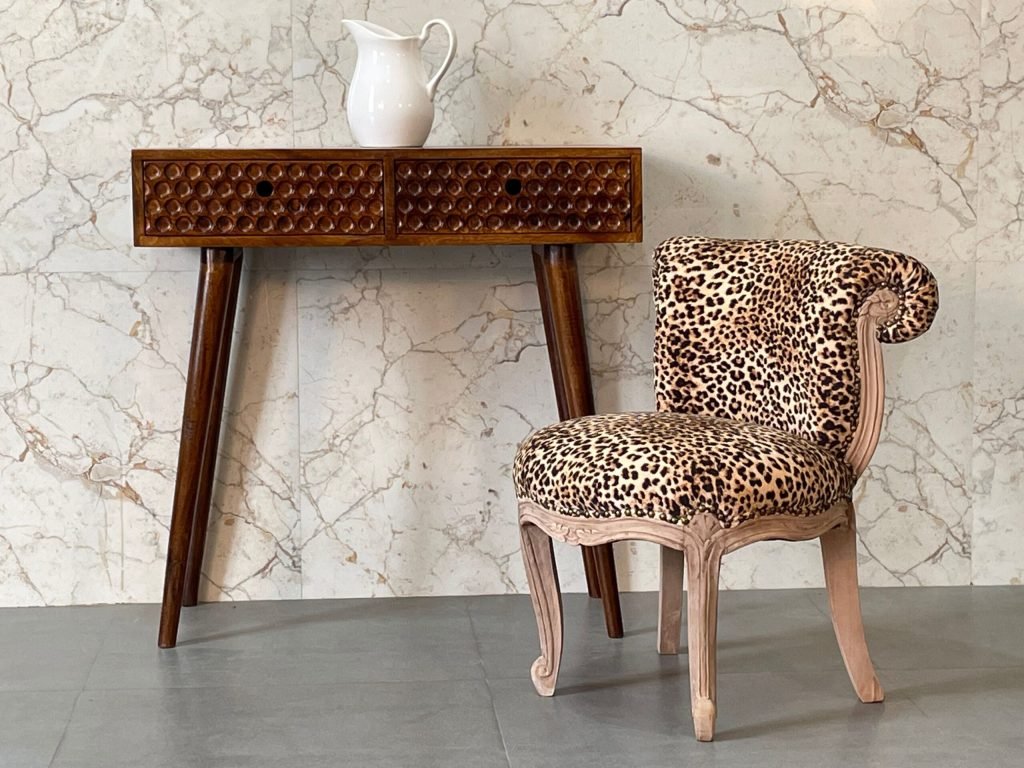
Jodhpur — reclaimed timber
A city carved out of desert sand, where reclaimed-timber workshops sit on the same streets as the temples. Another phase in the centuries-long life of a tree.
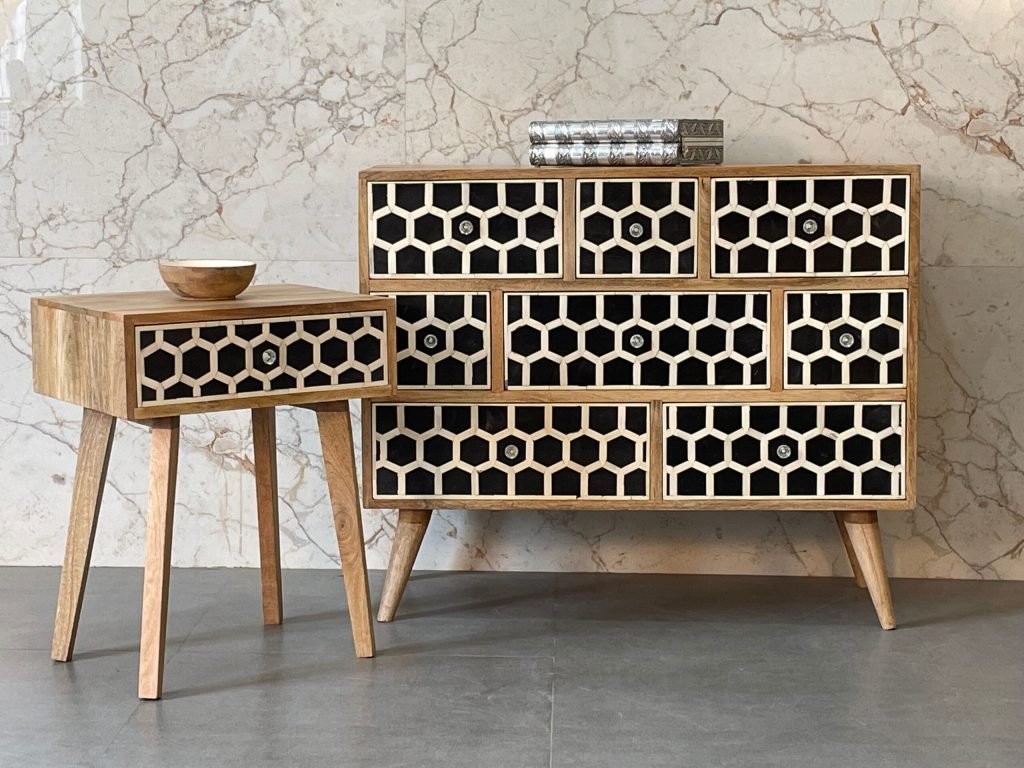
Sambhal — bone inlay
A rare and demanding art. The town’s heyday came under Mughal rule; when that faded, bone inlay rescued it. When a community has little else to rely on, it tends to become extremely good at what it has.
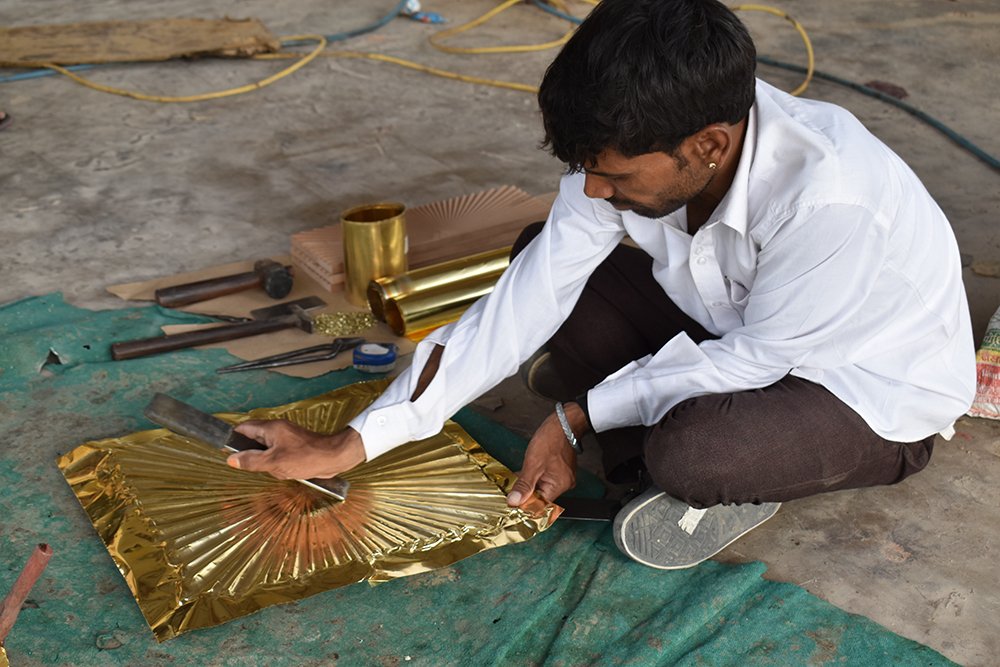
Moradabad — brass
One vast workshop from dawn to dusk, with the smell of metalwork hanging in the air long after the shutters come down. One of the fastest-growing industrial towns in northern India.
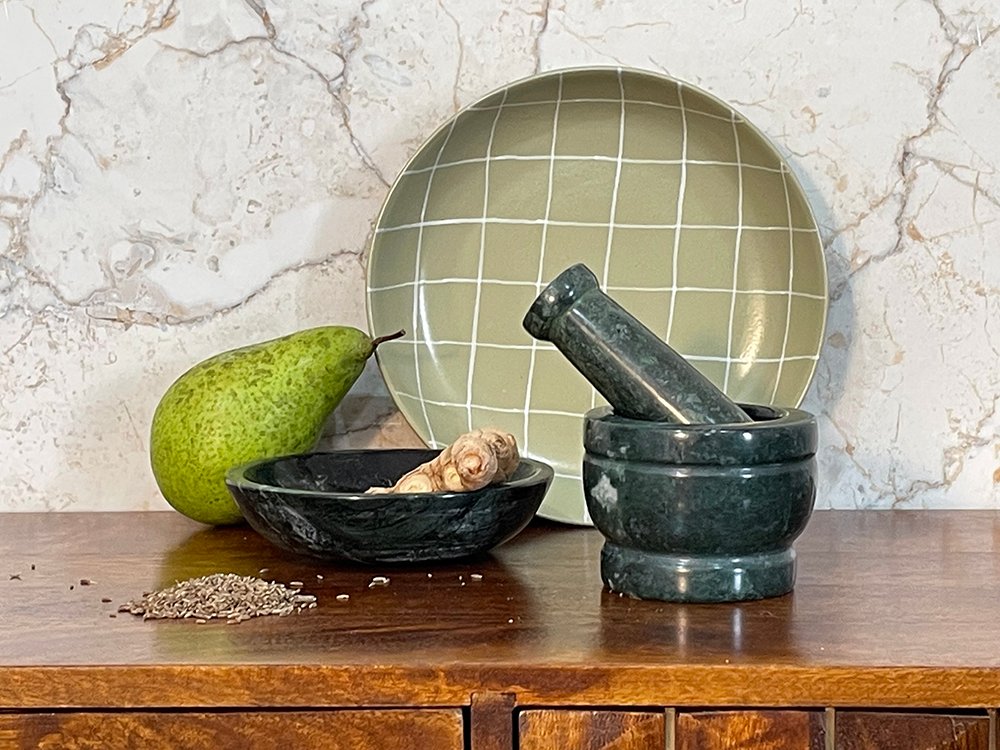
Agra — marble
The city of the Taj Mahal. It was Agra’s marble-cutting tradition that made the monument possible. Local folklore says today’s stonemasons descend from its builders — who allegedly had their arms cut off so they could never make anything so beautiful again.
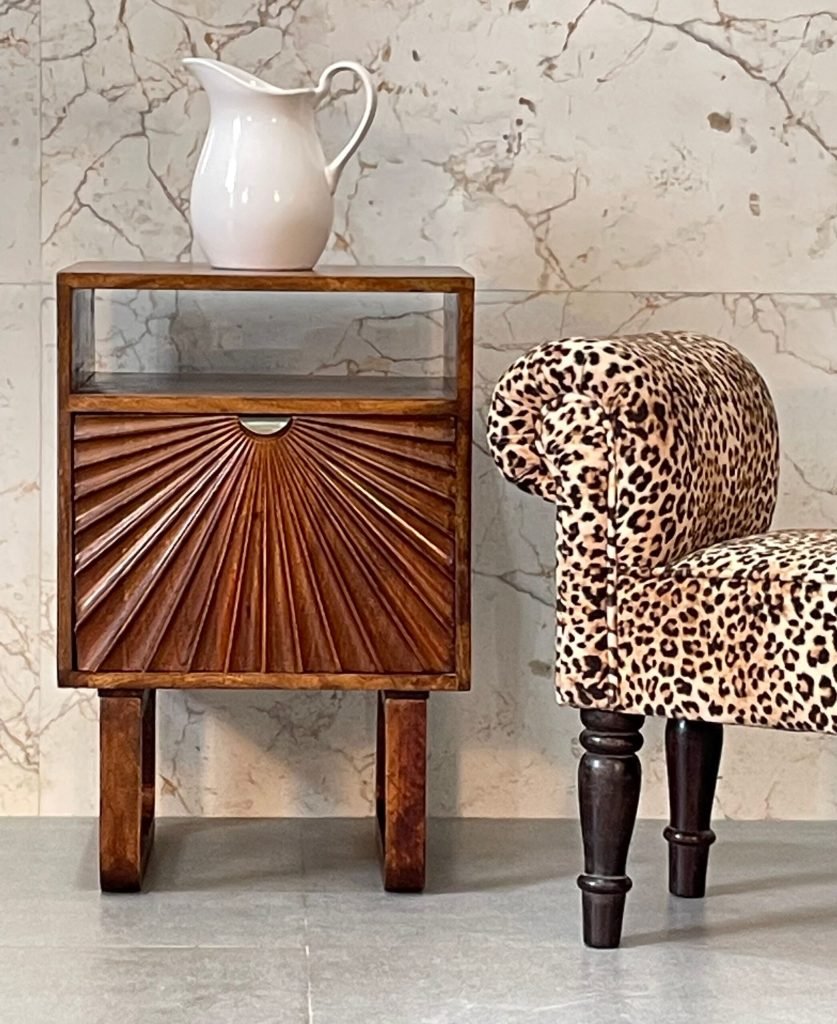
Aligarh — furniture fittings
Brass, iron and aluminium are as much part of the town’s fabric as its Mughal-era buildings. Handles, hinges and fittings that end up on cabinet fronts.

Khurja — ceramics
Known plainly as the Ceramic City. There are no fields or orchards around Khurja — instead, rows of roadside pottery stalls running the length of the town.

Amritsar and Panipat — textiles
Amritsar is famous for linen and velvet, traded to India’s colder regions even though the city itself bakes for most of the year. Panipat — known for the two battles that changed the course of Indian history — is now the cotton and jute centre of the north.
Agra and Firozabad are barely 50 kilometres apart. One lives on marble, the other on blown glass. On the road between them stands a roadside dhaba with a glassblowing studio on one side and a marble statuette showroom on the other.
Technology that does not spoil the craft
The techniques used in northern India have changed little since around 1600 — it is hard to improve on something that has worked for four hundred years. The tools, however, can change. Spray booths replace the rickety spraying nozzles. Blades keep the same shapes, only far sharper. Electric grinders are hand-operated, so they remain an extension of the artisan’s hand rather than a substitute for it.
The other half of the technology is entirely invisible: stock management, logistics and knowing what actually sells in a market six thousand kilometres away. An artisan in a small town has no way of knowing that — and does not need to. His job is to do what he does best.
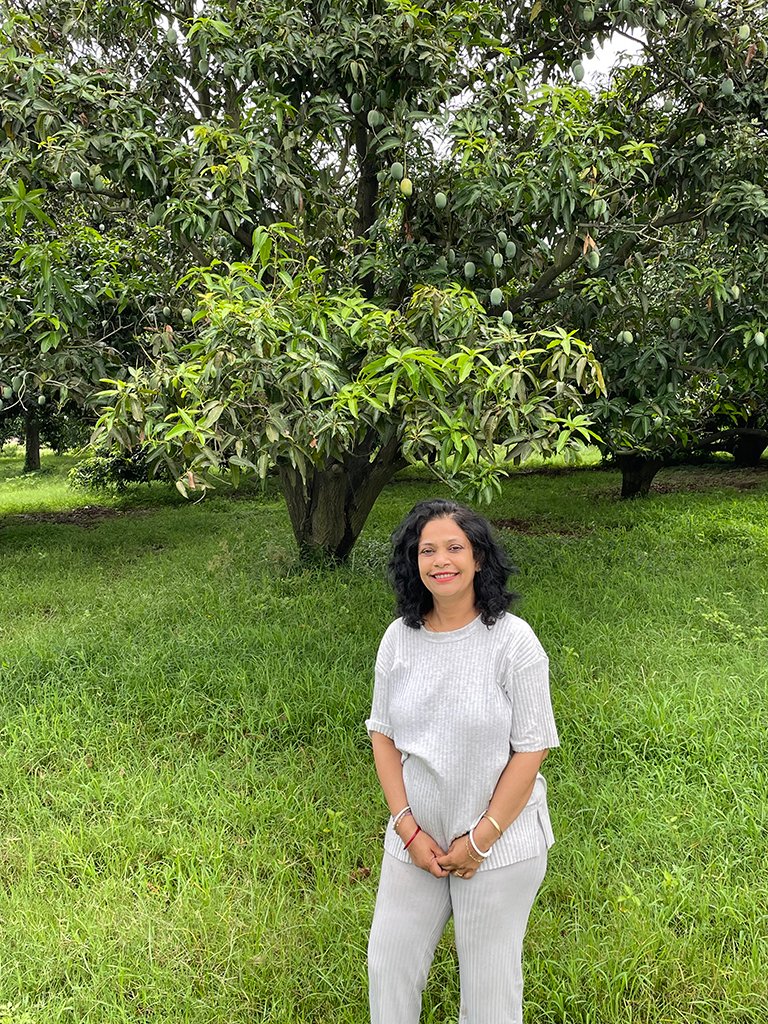
Why solid mango wood
Mango is dense and hard, with a strong, expressive grain — and it is a responsible material: it comes from orchard trees that have stopped bearing fruit and would be felled anyway. Every board has a different figure, which is why two pieces from the same run never look identical. Variations in colour and small marks left by the material are not flaws — they are the maker’s signature.
The founder: Amit Basu
A British citizen and London School of Economics alumnus. He started out in Jaipur in 1995 importing and exporting furniture. He has more than 25 years in the furniture and home decor industry, and has been recognised by the Goldman Sachs 10,000 Small Businesses programme and the Forbes Business Council.
What this means for the piece you buy
Every item passes through the hands of several artisans in several towns — a joiner, a carver, a metalworker for the fittings, sometimes a weaver. It is made in a small run, not on a line. That is why it has a character mass production cannot reproduce — and why it looks better with age, not worse.
Information and photographs about the maker: Artisan Furniture brand materials (artisanfurniture.net).